Is Your Cortisol Wrecking Your Hormones?
What the 4-point saliva test reveals that a blood test never will.
You eat well, you exercise, you try to manage your stress. But your sleep is fractured, your cycle is irregular, your mood dips in the week before your period, and no matter how early you get to bed, you wake at 2am with your mind running.
When I see this pattern in clinic, cortisol is almost always part of the story.
Not because stress is all in your head — but because the way your body manages cortisol has a direct and measurable impact on your sex hormones, your cycle, your energy, and your resilience. And the standard blood test your GP orders? It misses most of it.
What is cortisol, and why does it matter for women?
Cortisol is your primary stress hormone, produced by the adrenal glands in response to physical and psychological demands. It follows a natural daily rhythm — peaking shortly after waking to get you out of bed, then gradually declining through the day so you can wind down and sleep.
When that rhythm is working well, you feel energised in the morning, steady through the afternoon, and calm by evening. When it's dysregulated — either chronically elevated, persistently flat, or spiking at the wrong times of day — the effects ripple across your entire hormonal system.

Cortisol isn't just a stress response — it's a major hormonal regulator. When it's out of rhythm, your sex hormones, thyroid, blood sugar, and sleep all feel it.
The cortisol-progesterone connection
This is the mechanism I talk about most in clinic, because it's so commonly missed.
Cortisol and progesterone share the same upstream raw material: pregnenolone. Under chronic stress, the body prioritises cortisol production — it's a survival signal. This is sometimes called 'pregnenolone steal' or HPA-HPG axis competition, and the result is lower progesterone output.
Progesterone is the calming, balancing hormone of the second half of your cycle. It supports sleep, mood, and uterine lining. When it drops — relative to oestrogen — you can experience:
• Worsening PMS or PMDD
• Spotting before your period
• Shorter luteal phases
• Anxiety, irritability or low mood in the lead-up to your period
• Heavy or clotty periods
• Difficulty falling pregnant
None of this shows up on a standard hormone panel unless it's timed correctly and includes progesterone in the luteal phase. Even then, a single blood draw gives you a snapshot — not the full picture.
Why serum cortisol misses the picture
A morning blood cortisol — the standard GP test — is taken at the single point in the day when cortisol is naturally highest. It tells you whether your peak output is in a normal range. It tells you almost nothing about:
• How cortisol behaves across the rest of the day
• Whether it's dropping too steeply or too slowly
• Whether it's rebounding at night (hello, 2am waking)
• How your cortisol awakening response looks (the sharp rise in the first 30 minutes after waking)
• Free versus bound cortisol — what's actually bioavailable
These nuances matter enormously. Two women can have identical morning serum cortisol readings and completely different cortisol profiles across the day — with completely different symptoms as a result.
The 4-point salivary cortisol test
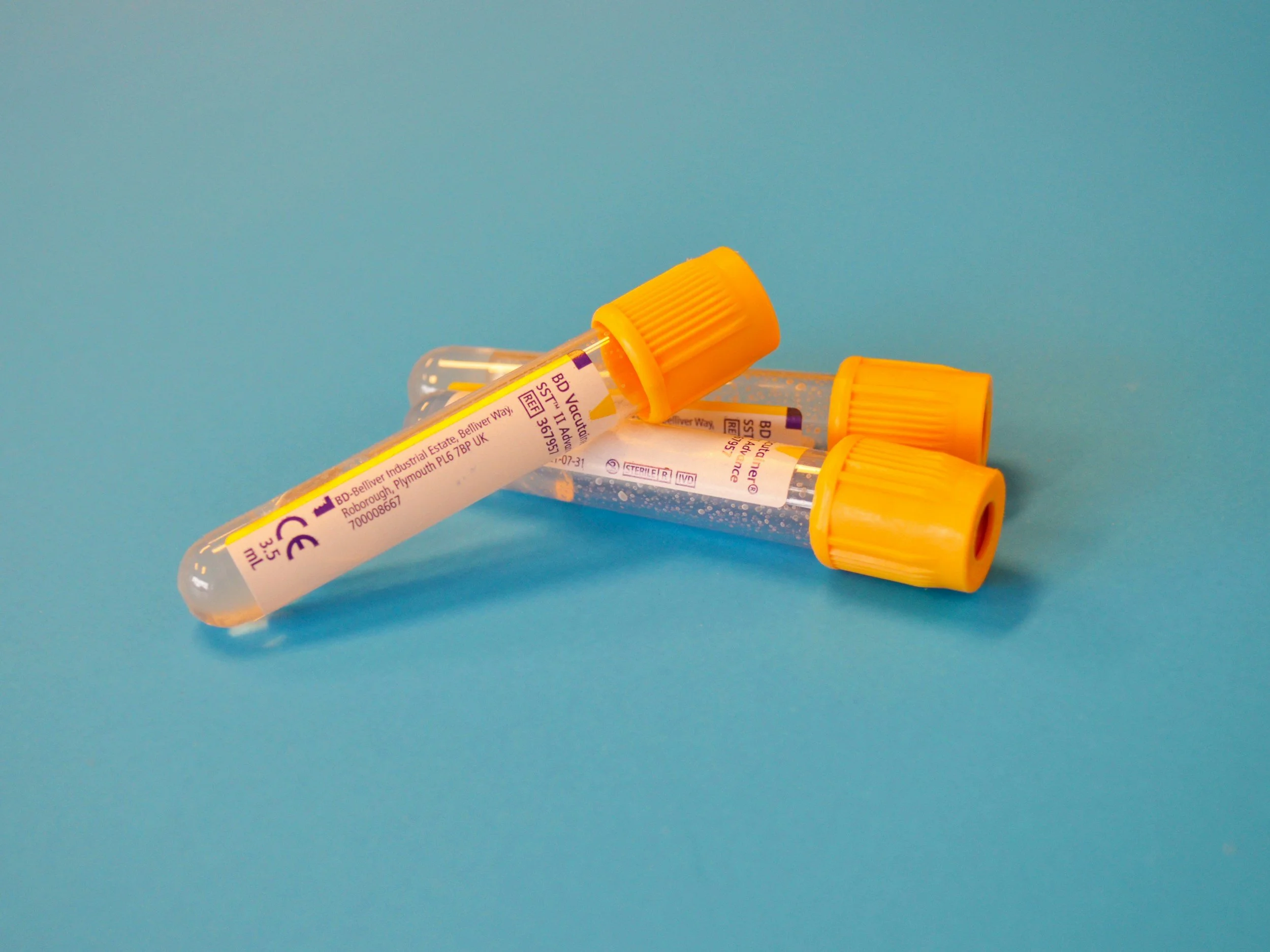
Salivary cortisol testing measures free (bioactive) cortisol at four points across the day — typically on waking, 30 minutes post-waking, midday, and evening. Some panels also include a night sample.
This gives us a cortisol curve: the visual pattern of how your stress response is behaving throughout the day. From this, we can see:
• Whether your cortisol awakening response is robust, blunted, or exaggerated
• Whether your midday and afternoon levels are holding steady or crashing
• Whether your evening levels are too high, keeping you wired at night
• Whether your overall output is elevated (common in early-stage burnout) or flattened (more common in longer-term adrenal fatigue)
Combined with a full symptom picture, cycle history, and often a DUTCH test (which maps urinary hormone metabolites in detail), this gives us a genuinely functional view of your stress-hormone-cycle relationship — and a clear place to start treatment.
The saliva cortisol test doesn't just measure your stress hormone. It maps the rhythm of your entire day — and often explains the symptoms that have been written off as anxiety, burnout, or 'just your cycle'.
What treatment looks like
Naturopathic support for cortisol dysregulation isn't just about adaptogens and magnesium (though both have their place). It's about understanding the pattern first.
A blunted, flat cortisol curve requires a different approach to an elevated, dysregulated one. Herbs like ashwagandha, rhodiola, licorice, and withania have very different actions on HPA axis tone — using them without knowing your curve is guesswork.
Once we have your results, treatment might include targeted adaptogenic and nervine support, sleep hygiene interventions timed to your cortisol curve, nutritional support for adrenal function, cycle-synced lifestyle strategies, and if indicated, progesterone support in the luteal phase.
Ready to find out what your cortisol is actually doing?
If the symptoms above sound familiar, salivary cortisol testing may be the missing piece. I offer comprehensive hormonal assessment — including cortisol mapping, DUTCH testing, and full cycle-synced panels — as part of my clinical programs.
Book a consultation to get started.
→ Book a consultation with Bron
Bron Gooden | Clinical Naturopath & Herbalist
BG Naturopathy | bgnaturopathy.com | @bgnaturopathy
Consulting at Kensington, NIIM Hawthorn & Daylesford Apothecary